

The digital gaming landscape is changing. It is moving beyond simple wagers and spins toward something more immersive and captivating. Cash or Crash Live is driving this change. It has radically transformed what a live game show means online. The platform operates on a clear and impactful principle. Each and every design choice, every piece of code, must serve one purpose: the gamer’s experience of control, fun, and influence.
The Core Philosophy: Player Empowerment as the Design Principle
Cash or Crash Live does not offer passive entertainment. The platform builds a full experience focused on user control. This is not an add-on or a promotional phrase. This philosophy is the foundation the platform sits on. The game mechanics, the host’s role, the way information is presented—everything is influenced by a dedication to gamer independence and real options.
You witness this empowerment in the transparent rules and the hands-on control you have over crucial decisions. Players are not watching a script play out a pre-determined story. You are in the driver’s seat, hands on the controls, navigating their own risk-reward path. This purposeful design creates a sense of control. It demands greater cognitive involvement than simply selecting a number or a card.
Take the core game decision: when to cash out. That authority rests completely with the player. There are no automatic stops or compulsory exits. This structure creates a unique psychological space. Your judgment is the ultimate determinant. Every round becomes a personal challenge, a test of your bravery and your reading of the game’s random collapse point.
The same philosophy directs communication. The platform displays all likely risks and rewards openly before you play. This candid approach builds a bond of mutual regard. It means you begin your game session feeling knowledgeable and in control. You are not tricked or confused by hidden complexity.
Building Clarity: The System Architecture Unveiled
Confidence is everything in virtual gaming. Cash or Crash Live builds that confidence through a policy of absolute openness. The platform pulls back the curtain on its core mechanics. It lets users grasp the ‘how’ and ‘why’ behind every result. This transparent style is a clear break from conventional, opaque systems where outcomes can feel random or hidden.
Verifiably Fair Systems and Real-Time Information
Verifiably fair technology lets players to individually verify the randomness of each game round. This encryption-based method creates a unique seed for each round. Any user can use it to check that the crash point was determined honestly, before any bets were placed. It proves the game was not manipulated after the fact.
You also have access to live data updates. The current multiplier progression and a record of recent outcomes are presented prominently. This transforms gameplay from a pure bet into an exercise in data-driven analysis. Players can look for statistical patterns, even though each event is unrelated. It adds a layer of analytical thought to the unfiltered excitement of observing the numbers climb.
The Role of the Live Host
Transparency here has a human touch. The host acts as a guide and a familiar host. They clarify the process, interact with the community, and infuse a personality to the game’s integrity. This human touch bridges the digital experience to something more tangible. It adds a measure of accountability that entirely algorithmic platforms cannot match.
The host describes the game’s progress live, often pointing out the escalating tension in the chat as the multiplier climbs. They are a reliable, trustworthy figure who explicitly reinforces the rules. Their involvement makes the sophisticated technology feel understandable and legitimate to everyone watching.
The Live Adventure: A Social Community, Beyond a Game
Cash or Crash Live recognizes that today’s players seek connection. Its live stream is crafted to be a social space, not just a game interface. With high-definition video, clear audio, and a lively interactive chat, it builds a dynamic, stadium-like atmosphere you can access from your living room.
This social dimension is essential to the user-focused model. Players discuss tactics, cheer each other’s wins, and interact directly with the presenter. The experience embodies the camaraderie of a shared live event. It creates a loyal community connected by the collective thrill of the game’s unfolding story.
The chat function is the heart of this community. Here, players share quick tips, flood the screen with emojis as tension builds, and offer congratulations for big cash-outs. This constant interaction means even if you are not betting in a particular round, you are still included in the audience. You partake in the group’s excitement.
The environment deliberately replicates the best parts of a TV game show or a big sports match. The shared emotional ride is a huge part of the fun. It directly fights the isolation that can come with online gaming. It builds a user base that comes back for the people and the atmosphere as much as for the game.
Platform and Accessibility: User-friendly Design for Worldwide Engagement
A great idea falls short if players cannot access it conveniently. Cash or Crash Live dedicates significant effort to a clean, intuitive user interface. The visual design is simple. A new player can learn the basics in no time. An seasoned player nonetheless gets all the analytical tools they require, without any clutter getting in the way.
Cross-Device Functionality
The system uses adaptive design as its core. This guarantees a smooth experience regardless of you are on a computer, a iPad, or a phone. This device-agnostic approach acknowledges the mobile-focused habits of users everywhere. It enables you engage on your chosen terms, wherever you are.
Performance is finely tuned for mobile, where short sessions are typical. Touch controls are large and reliable. Stream quality adjusts to your network speed. The layout reconfigures itself perfectly for smaller screens. This removes system friction. Your focus stays on the play, not on battling the interface.
Clearness in Each Action
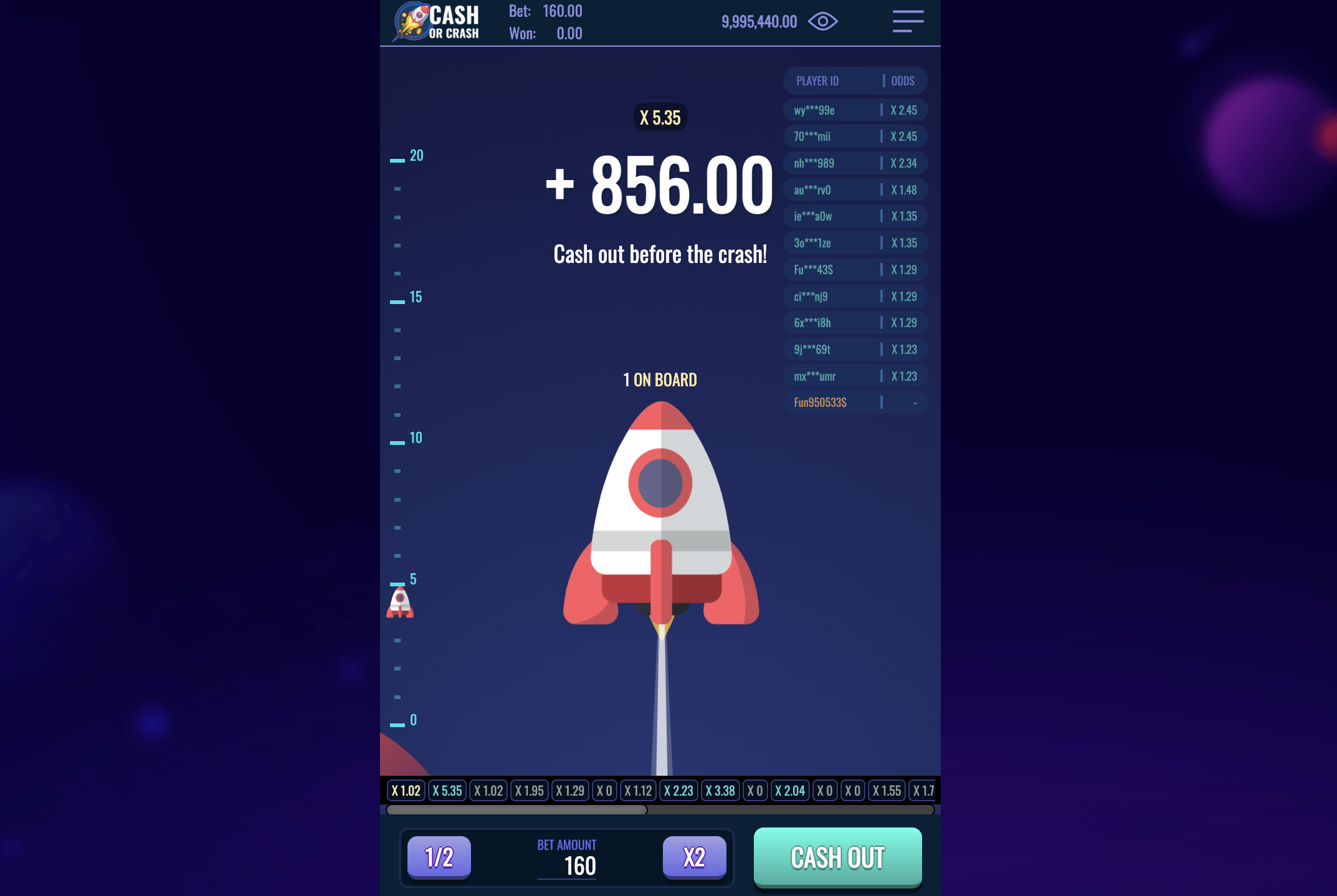
Each part of the interface is crafted to prevent confusion. The withdrawal button has a prominent, unmistakable placement. The current multiplier and possible winnings are displayed in plain view. This lowers psychological strain. Players can focus on gameplay and fun instead of interpreting a complicated control panel.
Key data—your stake size, your balance, your possible return—is displayed in oversized, readable fonts with strong color contrast. Action buttons have different visual weight. The cash-out button, for illustration, is often the most vibrant element on the screen. This reflects its crucial role. The design philosophy is straightforward: make sure the player’s goal translates immediately into action, without errors.
Strategic Depth: Where Mindset Intersects with Odds
Behind its glossy game-show exterior, Cash or Crash Live delivers real strategic depth. It is a intriguing study in risk management, probability, and emotional control. The core mechanic produces a constant, delicious tension. You must choose when to cash out before an unpredictable crash occurs.
Players develop and refine their own personal strategies. They study trends and manage their bankrolls round by round. This intellectual challenge elevates the platform above casual entertainment. It becomes a dynamic puzzle. Success here compensates more than luck. It benefits calculated decisions and disciplined timing.
Distinct strategic schools have emerged within the community. Some players favor a conservative, incremental method. They cash out at lower multipliers consistently to secure steady returns. Others employ high-risk, high-reward tactics. They pursue the multiplier curve much longer, sometimes guided by analysis of recent crash points, even though each round is independent.

The psychological element is just as important. The game expertly exploits cognitive biases like the gambler’s fallacy and the fear of missing out. Mastering the platform means more than understanding odds. It means mastering your own impulses. You come to understand to tell the difference between a strategic decision and an emotional reaction to the rising stakes.
Security and Responsible Gaming: Bedrocks of Trust
A platform that truly prioritizes the user must emphasize safety and responsibility as much as it does enjoyment. Cash or Crash Live operates under strict regulations. It uses advanced encryption to safeguard all user data and financial transactions. This technical safeguard is a basic need, not an optional extra.
Instruments for Controlled Play
The platform builds responsible gaming tools directly into the user experience. Functions like customizable deposit limits, time-out options, and self-assessment prompts are easy to find and use. By providing these instruments, Cash or Crash Live provides users the power to stay in control. It presents gaming as a conscious leisure activity, not a compulsion.
These tools are not tucked in obscure menus. They sit in your account management dashboard. You can set daily, weekly, or monthly deposit limits that are hard to change during a cooling-off period. You can opt for reality check alerts that notify you how long you have been playing. This fosters mindful engagement.
A Environment of Safe Entertainment
This commitment reaches into marketing and community management. The platform consistently promotes a message of balanced engagement. The presenter will often tell everyone to play for fun within their means. This helps cultivate a culture where enjoyment and safety reinforce each other.
The platform’s content steers clear of portraying gaming as a fix for money problems cash or crash live a guaranteed income. The emphasis stays on the entertainment value, the social experience, and the intellectual challenge. This draws a user base that values the experience itself, not the dream of unsustainable financial wins.
The Path Ahead: Advancing with the Audience
The transformation begun by Cash or Crash Live is ongoing and responsive. The platform’s evolution strategy is steered by user feedback and behavioral analytics. Progress here matches with what the community actually wants. This agile model views the user base as a collaborative partner in molding the product’s future.
We could see more personalized game variants, more extensive social features, or better integration of user-generated content. The consistent will stay the core philosophy: using technology not for its own sake, but to enhance user engagement, fairness, and fun. The platform is constructed to adapt. Its user-centric model must remain relevant and fresh for the long term.
One probable path is expanding interactive social features. This could entail team-based challenges where groups pool their strategies. It might involve viewer polls that influence minor game parameters, strengthening the community’s sense of ownership. Better personalization could let users customize their data dashboards or set alerts based on their selected strategy.
The underlying provably fair technology could also be used to offer more thorough transparency reports. It might drive educational content that helps users comprehend the mathematics behind the game. This devotion to continuous improvement, nourished by direct user input, secures the platform grows as a living service. It will keep perfecting that essential balance between thrilling entertainment and user-focused integrity.